
Recipe 01 · Greece · Horiatiki
Tested in Our KitchenGreek Salad
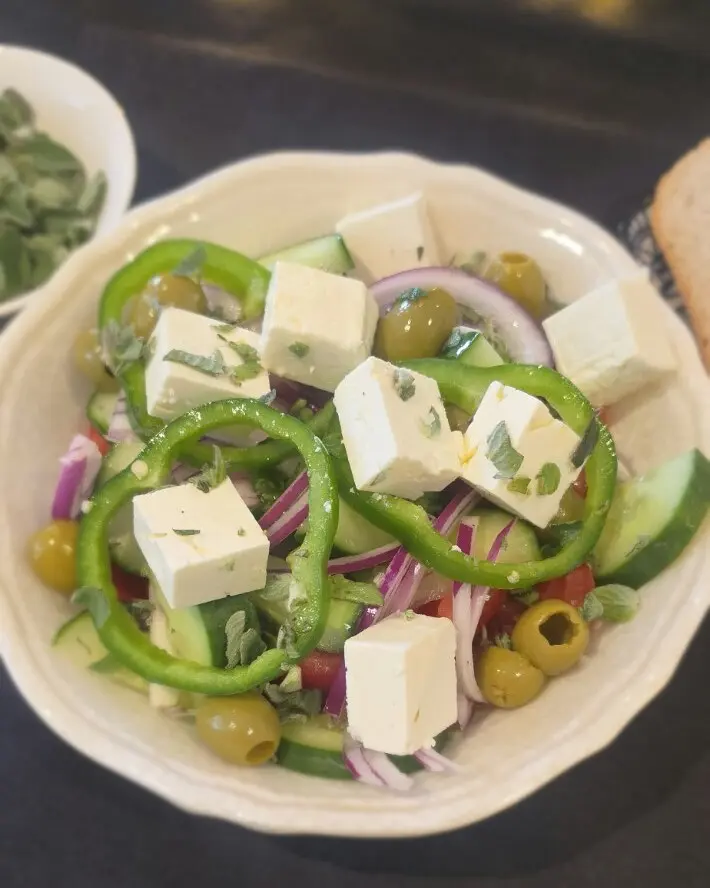
A Greek salad is simplicity at its best: ripe tomatoes, crisp cucumber, green pepper, red onion, olives and feta, finished with olive oil, oregano and a splash of Greek red wine vinegar.
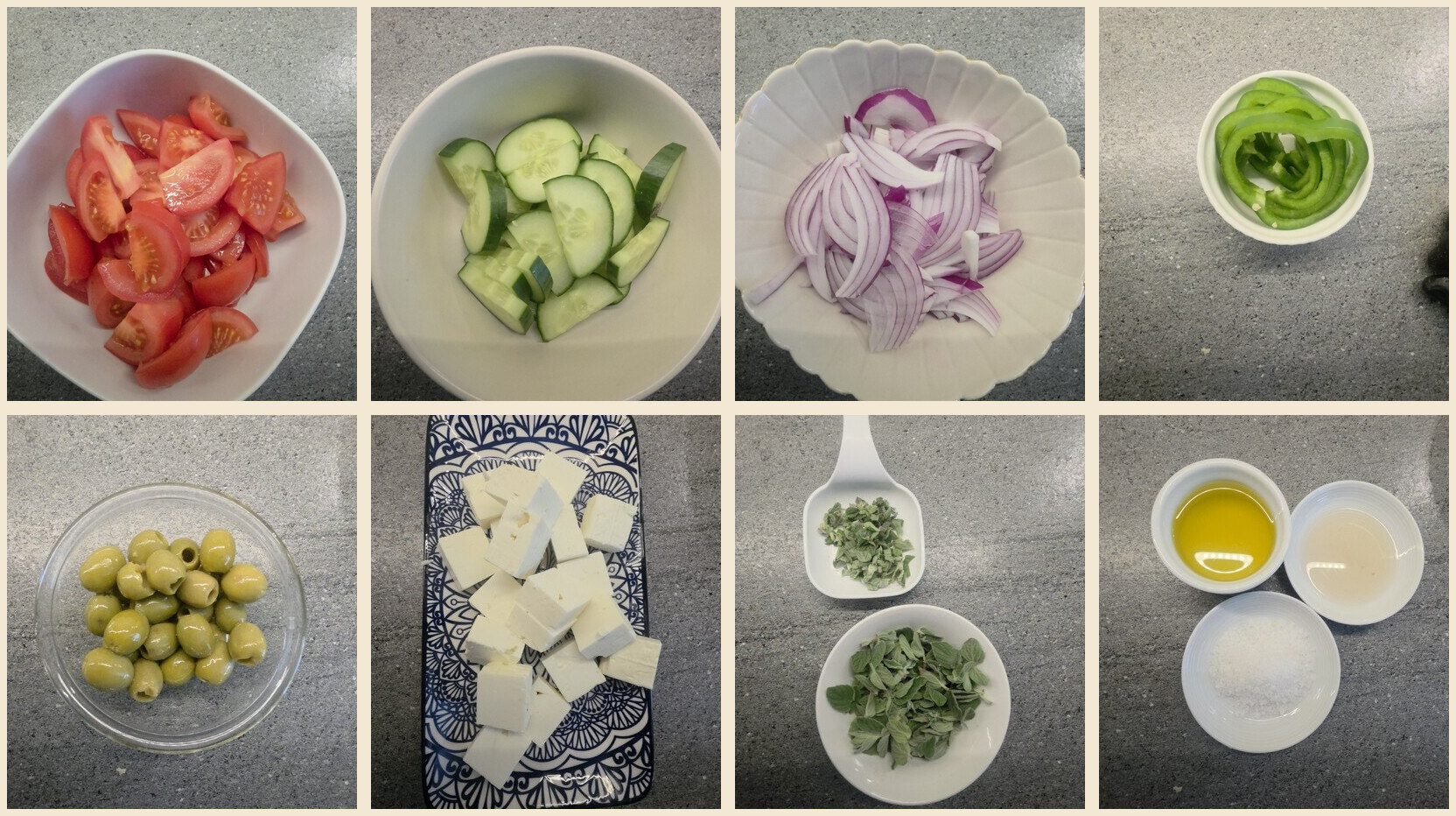
What went into our test
Ingredients,
by the eye.
- Ripe tomatoes, cut into generous wedges
- Cucumber, cut into thick half-moons
- Red onion, thinly sliced
- Green pepper, sliced into rings
- A handful of olives
- Feta, in generous pieces
- Dried oregano
- Extra-virgin olive oil
- Greek red wine vinegar
- A little sea salt, only if needed
- Crusty bread, optional, for serving
These guardrails describe our test, not a demand for identical ingredients. Taste and adjust as you go.
Assembly video
Watch every ingredient
join the dish.
Tested in our UK kitchen in August 2026. The finished dish, photographs and assembly video are from this real kitchen test.
The method
How to cook
and assemble it.
The written steps support the video and include the practical guardrails a beginner needs.
Build the base
Start with enough tomatoes to make a generous base in a wide bowl.
Add the vegetables
Add cucumber, green pepper, red onion and olives. Keep the cuts generous so each ingredient keeps its character.
Dress by the eye
Sprinkle over oregano, add a little red wine vinegar, then drizzle in enough olive oil to lightly gloss everything.
Taste first
Taste before adding salt: feta and olives may already bring enough.
Finish gently
Add the feta last, turn the salad once or twice very gently, and serve straight away.
What to notice
A few signs that matter
more than the clock.
Each recipe shares the cues needed to cook it successfully. Broader collections and deeper lessons remain available through our guides, courses and future books.
Tomato juices
A little juice collecting at the base of the bowl is good—it becomes part of the dressing.
Feta stays whole
Add the feta last and turn only once or twice, so it stays in generous pieces.
Salt balance
Taste after olives and feta. Often, no extra salt is needed.
If the dish needs correcting
If it tastes flat, add a small splash more vinegar before adding salt. If it becomes too juicy, serve it immediately with bread rather than draining away the tomato juices.
Nutrition snapshot
Useful context,
without false precision.
Estimated per stated serving from the real kitchen test. Flexible amounts mean a range may be more honest than a single exact figure.
How our estimates work- Fat
- 15g
- Saturates
- 5g
- Carbohydrate
- 7g
- Of which sugars
- 5g
- Fibre
- 2g
- Protein
- 5g
- Salt
- 0.7g
Dietary: Vegetarian · Gluten-free without bread
Allergens: Milk (feta)
This estimate is based on our tested bowl serving three as a side. The feta and olive-oil amounts change calories, fat, saturated fat and salt the most. Adding bread is not included in these values and will change the nutrition and allergen profile.What the ingredients bring
Nutrients,
ingredient by ingredient.
Meaningful contributions and relevant trade-offs, without turning a home-cooked dish into a medical promise.
Tomatoes
Vitamin C + lycopeneTomatoes bring freshness, vitamin C and lycopene, a natural red plant pigment.
Green pepper
Vitamin CGreen pepper adds a particularly useful contribution of vitamin C.
Cucumber, onion and oregano
Fibre + plant compoundsThese add texture, flavour and small amounts of fibre and plant compounds.
Feta
Protein + calciumFeta contributes protein and calcium, while also being the main source of salt and saturated fat in the dish.
Olive oil and olives
Unsaturated fatsThese provide the characteristic Mediterranean fat profile, though olive oil also changes the calorie estimate quickly.
Tested in our kitchen: the finished food, photographs, video and observations are from a real UK kitchen test. AI may assist with earlier concept imagery or editorial preparation and is labelled when used.
Nutrition: general estimated information only; not medical advice. Always check product labels and allergens for your own needs.